Care for Mom
Your Postpartum Recovery
7 min. Read

It can be easy to feel overwhelmed after you have delivered your baby. Below, we’re sharing a list of postpartum essentials and tips to help you with your postpartum recovery.
Preparing for Postpartum
Planning for your postpartum recovery is just as important as planning for your birth. While it’s exciting to bring your baby home, you might be mentally and physically exhausted. And planning daily tasks, like what to eat for dinner, may be the last thing you feel like doing.At this point, you’ll be adjusting to a new way of living as you get used to your little one’s erratic sleep schedule. In the beginning, your baby might be waking up every three hours to be fed and changed, and this lack of sleep can take a toll on you mentally and physically. This is why planning is important.
By planning ahead for things like:
- Using a meal delivery service or having friends and family members take turns to cook
- Organizing a cleaning service once a week
- Reaching out to friends/family for help for small tasks like grocery shopping
These will hopefully make your postpartum time a little easier.
Prioritizing Your Self-Care After Birth
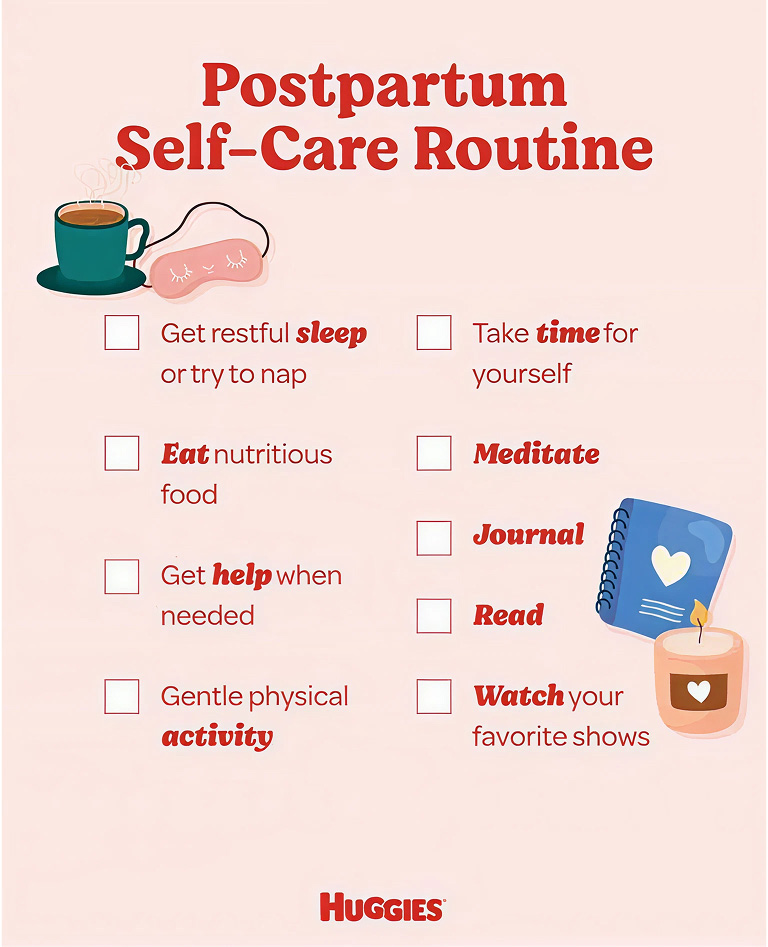
Also, try to create a new routine and include things that you can do daily but know that you probably will need to be flexible about.
Here are some things you can try including in your self-care plan:
- Get restful sleep or try to nap
- Eat nutritious food
- Ask for help when needed
- Gentle physical activity such as walking
- Take time for yourself
- Meditate
- Journal
- Read
- Watch your favorite shows
Physical Recovery
Whether you delivered via C section or vaginally, your body went through a lot to get your baby into the world. It may not always be easy to get but remember that your body will need rest. Now is a great time to ask for help when you need it and give you time for some rest.Understanding Your Limitations
At the beginning of your postpartum recovery, you may feel achy, sore, and have some pain as well as feel exhausted. Your body is still healing.Since everyone’s post-birth recovery time is different, you might feel frustrated by your pace. However, while you’re in this stage, it's best to listen to your body and your medical provider. Try not to overdo it!
Prioritizing Your Rest
During your recovery, you’ll be dealing with physical and emotional changes that will probably make you feel tired. Getting plenty of rest allows your body to heal and will hopefully help avoid the mental and emotional toll that being sleep deprived can take.Your Emotional Well-Being
During pregnancy and after delivery, you’re in hormonal flux. As your hormones do their best to regulate, you might experience the baby blues. These temporary hormonal changes can cause anxiety, crying, and restlessness. (If symptoms last for more than two weeks, this may be postpartum depression, and you should see your medical provider.) Now having a solid support structure is most crucial.Building a Support System
A solid support structure during your postpartum recovery journey is important. It can include your partner, family, friends, a therapist, and of course your follow up appointments with your medical provider and your baby’s medical provider. Becoming a parent is a huge adjustment on every level. Now is when being able to lean on your support network and share any fears and worries can be a great relief.Embracing Self-love
Your body and priorities have likely changed during your pregnancy and after delivery, so now more than ever, self-love is the key.As you recover and your body continues to change, be kind to yourself.
Self-love can sometimes feel difficult, especially when your focus is on your baby. But it’s important to remind yourself that you are worth the rest and relaxation and that you deserve to do the things you enjoy. It’s also important to remember that it’s okay and healthy to maintain a self-identity outside of being a mother.
Treating yourself with the kindness, compassion, and empathy you deserve can go a long way to helping you feel more confident. And if you’re having a hard day, remember to speak to a loved one, a friend, or a therapist.
Bonding with Your Newborn
In the beginning, you might think that bonding happens automatically, and for some parents it does. But between the exhaustion, possible stress, and hormonal changes, you might find it difficult to bond with your baby at first.If any of these are affecting your ability to bond with your baby, it’s important to speak to your medical provider or therapist.
Eventually, you’ll find that bonding with your baby will come more easily. By practicing skin-to-skin, you’ll connect with your baby through your touch. Feeding is another great way to bond, whether you’re breastfeeding or bottle feeding.
Your postpartum recovery is an important time in your journey of motherhood. You’re bonding with your new baby while getting to know a new version of who you are. Caring for yourself and leaning on those around you for support will not only help you heal but help you be the best mom you can be.
Embrace Postpartum with Huggies®
Embrace the precious moments of postpartum life with the gentle support of Huggies® Newborn Diapers. As you prioritize self-care and bonding with your little one, trust Huggies® to provide the softness and protection your baby needs. Discover the perfect fit for your newborn at Huggies® Newborn Diapers, and let us be a part of your family's first milestones.References
https://www.stanfordchildrens.org/en/topic/default?id=the-new-mother-taking-care-of-yourself-after-birth-90-P02693 https://kidshealth.org/en/parents/bonding.html https://www.acog.org/womens-health/experts-and-stories/the-latest/bonding-with-your-newborn-heres-what-to-know-if-you-dont-feel-connected-right-away https://www.womenshealthservices.com/blog/5-healthy-self-care-practices-to-embrace-after-giving-birth https://www.hopkinsmedicine.org/health/wellness-and-prevention/postpartum-mood-disorders-what-new-moms-need-to-know https://www.acog.org/clinical/clinical-guidance/committee-opinion/articles/2018/05/optimizing-postpartum-care
Kimberly-Clark US makes no warranties or representations regarding the completeness or accuracy of the information. This information should be used only as a guide and should not be relied upon as a substitute for professional medical or other health professional advice.