Care for Mom
Breastfeeding Tips
3 min. Read

To help you out – and ease your mind – we're sharing a list of insightful and practical tips to navigating your new breastfeeding journey. You got this and we hope this guide helps to make this new transition a little easier for you.
Understanding Baby Cues
Those little grunts, wiggles, and wide-eyed stares are not random! They’re your baby’s way of saying, “Feed me,” or “I need you.” Once you start picking up on those cues breastfeeding may feel a lot less like guesswork and a lot more like a team effort.Before the crying starts, most babies give off subtle hunger hints. The biggest giveaway is the rooting reflex, which involves turning their head with an open mouth. Sucking on their hands, fist munching, or smacking their lips are other signals.
Getting into a Routine
You will likely find that you have to shift your day-to-day routine to adjust to your baby’s needs.In the beginning, it is important to tune into the rhythm your baby’s showing you. Notice when they start getting hungry and how long they usually nurse. It’s less about the clock and more about the cues. Over time, you’ll notice rhythms emerging, and you can gently shape your day around them.
How to Create a Comfortable Breastfeeding Environment
Your space matters a lot, so the right setup is important. When you’re nestled somewhere calm and cozy, it’s easier to relax. To feel like you’ve got this. Here are some tips on how to create a comfortable environment for breastfeeding:- Pick a peaceful spot: Your bed, couch, or a glider by the window. Somewhere tranquil and distraction-free.
- Set the mood: Dim the lights, play soft music, or use white noise. A calm space helps calm your body, which can lead to a better letdown.
- Stock your essentials: Keep a basket close with nursing pads, burp cloths, wipes, and Huggies® Diapers. Find a range of sizes - from preemie to size eight – all made without harsh ingredients, free of fragrances, parabens, and elemental chlorine.
- Dress comfy: Wear soft nursing bras and cozy clothes. Make sure your baby has soft gentle clothing as well such as cotton onesies and swaddles.
- Support your body: Use a nursing pillow or stack of cushions.
Finding the Right Position for Breastfeeding
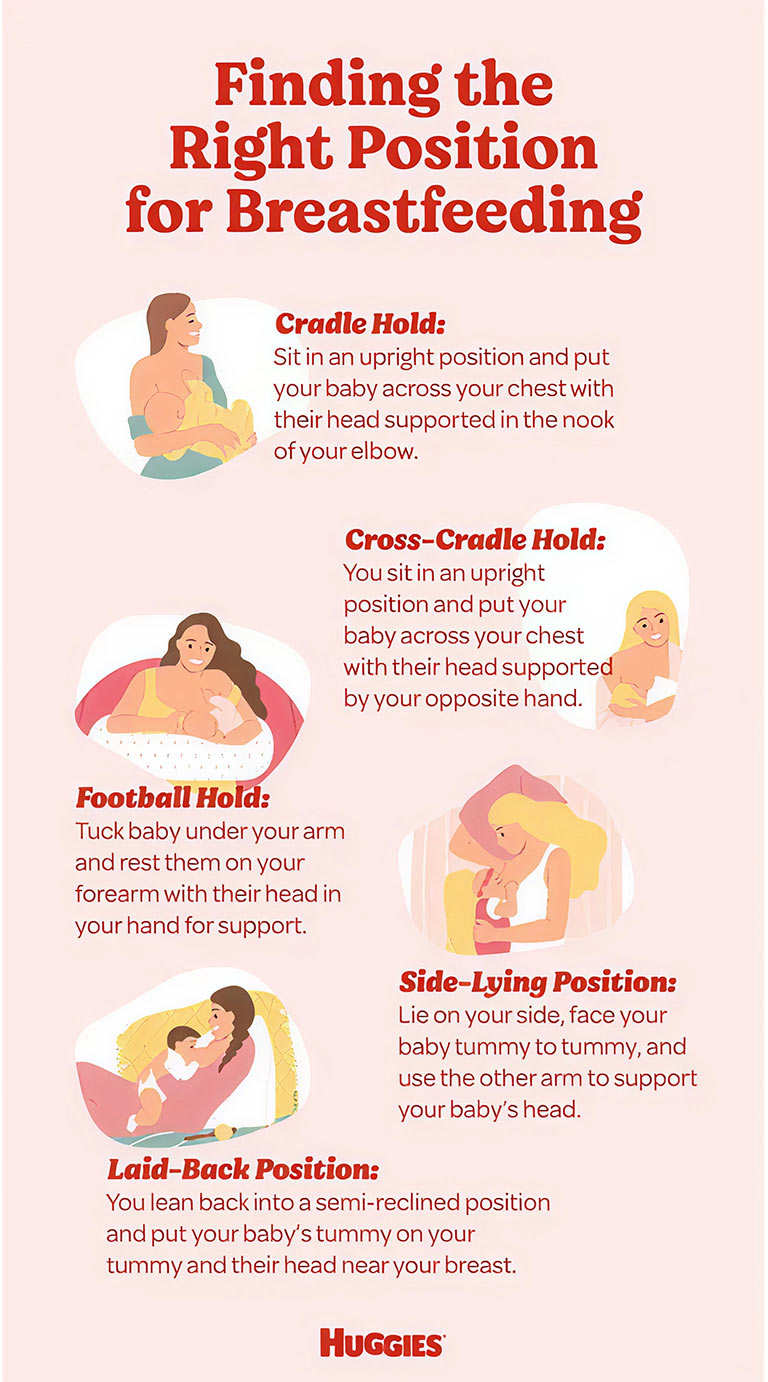
Here are a few common breastfeeding positions:
1. Cradle Hold: This is the most common position. You sit in an upright position and put your baby across your chest with their head supported in the nook of your elbow. Use your other arm and hand to support the rest of your baby’s body.
2. Cross-Cradle Hold: You sit in an upright position and put your baby across your chest with their head supported by your opposite hand. Your other hand can be used to support your breast from underneath.
3. Football Hold/Underarm Hold/Clutch Hold: Tuck baby under your arm and rest them on your forearm with their head in your hand for support. This position works well if you’ve had a C-section, have larger breasts, or just want to keep pressure off your belly.
4. Side-Lying Position: You lie on your side, face your baby tummy to tummy, and use the arm you are not lying on to support your baby’s head.
5. Laid-Back Position/Biological Nurturing: You lean back into a semi-reclined position and put your baby’s tummy on your tummy and their head near your breast. This position has been shown to improve your baby’s latch and decrease your nipple discomfort.
Taking Care of Yourself
Don’t forget you are a part of this routine as well. It is important to be patient with yourself, reach out for support if you need to, and stay nourished to fuel your mind and body. Enjoy high-protein foods like eggs, Greek yogurt, nuts, lentils, and lean meats to help increase your milk supply, your energy levels, and your overall mood.Additionally, be sure to stay hydrated by drinking plenty of water. Keep a water bottle nearby during feeds and be sure to sip throughout the day. Rest may feel like a luxury right now but try to get as much sleep/rest as possible. Even a short nap or a few minutes with your feet up helps. When you’re cared for, breastfeeding tends to flow a little easier, and your milk supply has a better chance of keeping up with your baby’s needs.
References
1. Cleveland Clinic (2022) Rooting Reflex. Medically reviewed 14 June. Available at: https://my.clevelandclinic.org/health/articles/23257-rooting-reflex (Accessed: 6 May 2025). 2. Mayo Clinic Staff (2025) Breastfeeding Nutrition: Tips for Moms. Published 28 March. Available at: https://www.mayoclinic.org/healthy-lifestyle/infant-and-toddler-health/in-depth/breastfeeding-nutrition/art-20046912 (Accessed: 6 May 2025). 3. Cleveland Clinic (2023) 7 Common Breastfeeding Positions. Available at: https://health.clevelandclinic.org/breastfeeding-positions (Accessed: 5 Sept. 2025).
Kimberly-Clark US makes no warranties or representations regarding the completeness or accuracy of the information. This information should be used only as a guide and should not be relied upon as a substitute for professional medical or other health professional advice.