Care for Mom
Pregnancy Guide: Week-by-Week
15 min. Read
Below, we're sharing more about your pregnancy week by week, including some common symptoms and milestones. We’ll also include tips to help ease your symptoms during your pregnancy trimesters to help you prepare for the arrival of your little one.
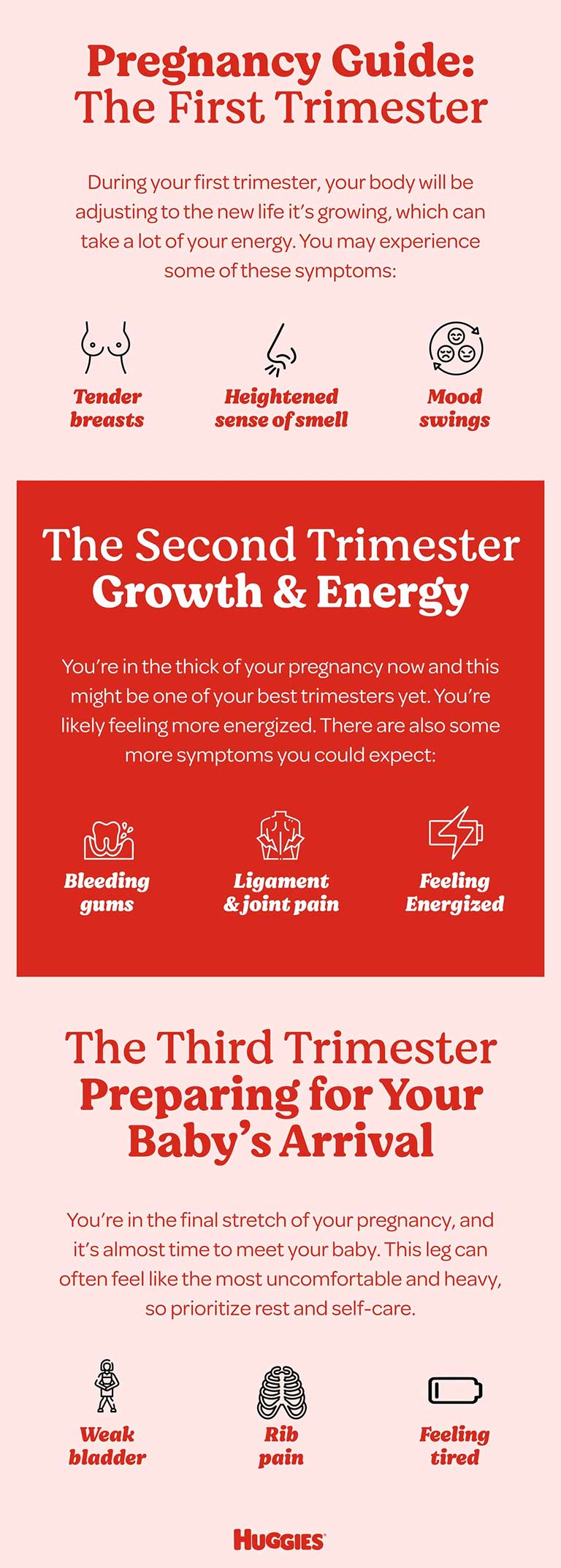
The First Trimester
Week 1
At this early stage of your journey, you likely won’t be pregnant yet. It might seem a bit confusing, but even though you’ve probably started your period, your doctor will use this date to begin tracking your pregnancy trimesters.Week 2
When you’re trying for a baby, this is the week the magic happens, and fertilization occurs. This is also the start of when complex processes are happening within your brain and reproductive organs.Week 3
By week three, your body has recognized that you are pregnant. You’ll likely have noticed a heightened sense of smell kicking in, making your favorite scents smell heavenly and your least favourite stomach turning.Week 4
By now, you’ve probably missed your period and taken a test and know for sure that you’re pregnant. Congratulations! While this is an exciting time, it’s still recommended that you wait before telling friends and family at this early stage. You might feel some cramping and even have spotting during fertilization.Week 5
It’s important to remember that every mom-to-be has a different journey throughout her pregnancy trimesters. You might experience some of these symptoms, all of them or none in the very early days.If you are experiencing symptoms, at this point you’re probably feeling nauseas (AKA morning sickness), more fatigued than normal, and possibly breast pain and tenderness.
Week 6
At this point, you might be seeing some early changes to your body already, your tender breasts might have become more swollen and enlarged. Your weight might also be changing. This could mean weight gain or weight loss if your morning sickness has been intense. By this point you will likely be able to see the baby on an ultrasound scan, how exciting!Week 7
By now, you’re getting into the thick of your pregnancy symptoms. Even though it might not be noticeable on the outside, physical and emotional changes are happening. You might experience mood swings, bloating, and feel tired all the time. Your sensitivity to smell and your morning sickness might also affect what you can eat.Week 8
Week eight might bring with it specific food cravings, and nothing will scratch the itch quite like your favourite snack or food.Week 9
While you probably won’t have gained enough weight for others to notice your pregnancy, you might notice the change in your body. Thanks to hormonal changes, your waist might be expanding, but you might also be experiencing your first bouts of pregnancy constipation and heartburn.Week 10
At your doctor’s appointments you’ll probably be able to see your baby move on scans even though you can’t feel them yourself. Now that you’ve entered the final stretch of your first trimester, you’re probably experiencing a host of symptoms.Week 11
As your body adjusts to your growing baby, you might notice your first batch of visible blue veins. This extra blood is to help your growing baby. You might also experience some dischargeWeek 12
Welcome to month three of your pregnancy journey! At this point, it might be obvious that you’re pregnant, with a more pronounced bump. But if this isn’t the case, it’s completely normal, and everyone’s body reacts differently. Luckily, some of those more intense early symptoms, like breast pain and morning sickness, might also be coming to an end.Week 13
You’ve made it to the end of your first trimester, and some new symptoms might be happening. While you might notice yourself feeling less tired, dizziness, and a decreased sex drive might also be affecting you.Your first trimester can be an interesting time full of emotional and physical change. During your journey it’s important to care for yourself first. Remember to rest and take it easy while you grow a life.
This is also a good time to start focusing on eating healthy, reducing your alcohol and caffeine intake and making sure you’re taking your prenatal vitamins.
If you feel like foggy “pregnancy brain” has kicked in, you can keep our handy pregnancy tracker in your back pocket. Use it to check on the development of your baby and what you can expect in your pregnancy week by week.
The Second Trimester: Growth and Energy
Welcome to your second trimester. You’re in the thick of your pregnancy now and luckily this might be one of your best pregnancy trimesters. With those first trimester symptoms easing, you’re likely feeling more energized. There are also some exciting new experiences to look forward to.Week 14
You might be feeling like you’re “eating for two” with your pregnancy hunger really kicking off. Growing a life takes a lot of fuel so go ahead and make sure you eat healthy while still making some room for those cravings.You might also start to experience bleeding gums thanks to hormone changes. This is normal, just make sure you stick to your daily hygiene routine. By now, your joints and ligaments may move to make room for your growing baby. This can cause some temporary pain or discomfort.
Week 15
Now that you’re likely feeling more energized, you might find your libido increasing. Unfortunately, you might also be experiencing some tougher symptoms like nosebleeds, shortness of breath and indigestion, and heartburn.Week 16
Have you been feeling a fluttering sensation in your tummy or what feels like gas bubbles? That’s your baby moving! At first this can feel subtle and confusing to tell apart from the previous two sensations, but as this happens more regularly, you’ll know when it’s your little one.Week 17
Your baby is now about the size of a pear, and as your uterus grows to accommodate them, you’re likely starting to show quite obviously. This growth along with some other symptoms might cause discomfort, making it difficult to sleep.Week 18
You’re probably feeling your baby move more, but if you aren’t, this is common. Some moms-to-be only start feeling regular movement at around the 20-week mark, but if you are feeling worried about it, please speak to your doctor.Week 19
This week you might notice some interesting new changes in your body, like swelling. You’ll especially notice this in the hands, feet, and facial area. You may also notice areas of your skin becoming darker around the nipples, face and other parts of your body with your linea nigra (the dark line down your belly) appearing.Week 20
Feeling restless, tired, and itchy? As you grow to make room for your now banana-sized baby, the skin around your bump and breasts will likely start to feel itchy. To ease this, try regularly moisturizing your skin.Week 21
You’ve made it to week 21, this means you only have four months left in your pregnancy journey. At this point, you’re likely experiencing quite a range of symptoms like backache, bloating, bleeding gums, swelling, and/or leg pain.Week 22
Week 22 might have you feeling uncomfortable thanks to piles, dizziness, swelling, and backache. On the flip side, this is a great time to begin bonding with your baby by talking or singing to them, you might even feel movement in response!Week 23
Surprisingly, at this point some of your earliest pregnancy symptoms might be making a comeback. Mood swings, morning sickness, sensitivity to smell, and cravings could all be making an appearance again.Week 24
Ever heard of the pregnancy glow? This week you might be feeling more radiant than ever. Thanks to changing hormones, your hair, skin, and nails might be looking better than ever. It’s totally normal, however, if this isn’t the case for you, as everyone’s hormonal shifts create different results.Week 25
Your baby is now roughly the size of a bunch of grapes. Restless legs syndrome and swelling can make an appearance, making sleeping more difficult.Week 26
As you reach the end of your second trimester many familiar symptoms will still be lingering as new ones make an appearance. By now, you might have already seen an increase in urination as your baby grows heavier. This pressure can create a significant increase in bathroom visits, coupled with constipation.Your body is starting to prepare for birth, so you might be feeling the occasional period-like cramp. Your doctor will also likely be checking for signs of diabetes at this point.
Week 27
You’ve probably started to notice a change in your digestion but as you progress in your pregnancy you might struggle even more. This can also come with increased heartburn.As close out your second pregnancy trimester, use these tips to help make your journey easier.
- Try daily gentle exercise approved by your medical provider. This can help in the birthing process as well as with digestive issues. Take it slow and take breaks if you’re feeling short of breath.
- Moisturize your skin regularly. Not only will this help with itching, but it might also help with stretch marks.
- Avoid spicy, fatty, and sugary foods
- Add a good amount of fiber in your diet to help with constipation
- Stay hydrated
- A pregnancy pillow might be a great addition to help you sleep more comfortably.
- If you’re comfortable, share the news with those closest to you as well as to your employer. This is also a time to start planning for maternity leave, if needed.
The Third Trimester: Preparing for Your Baby’s Arrival
You’re in the final stretch of your pregnancy, and it’s almost time to meet your baby. This leg can often feel like the most uncomfortable and heavy, so prioritize rest and self-care.Week 28
During your third pregnancy trimester comfort is key as both you and your baby begin preparing for birth. Their movements are probably on the sharper more painful side, leaving you feeling achier than beforeWeek 29
Your baby is about the size of a butternut squash this week, and you’re feeling it. Something else you might be feeling- your baby’s hiccups. If you haven’t already, now is the time to create a to-do list to prepare for their arrival.Week 30
Item number one on your to-do list? Thinking of a name for your little one. Now is a great time to decide what you’ll be calling them once they arrive. Your nesting instinct might also be kicking in now.You might also notice an increase in cramping. This is all normal and a sign that your body is preparing to give birth. But if your cramps are worrying you, always speak to your doctor.
Week 31
As your nesting instinct takes over and you dive into full preparation mode, cleaning, organizing, and creating a safe space for your little one is a top priority.During this time, you and your partner might want to prepare your space. This includes stocking up on essentials such as Huggies® Little Snugglers® Diapers. Featuring a front and back blowout blocker, Little Snugglers® are gentle on the skin with stretchy leg cuffs and are the only leading brand with all-around blowout protection*.
Week 32
The closer you get to your due date; you might notice that your breasts start leaking. This is happening in preparation of the arrival of your little one. If your practice contractions (the period like ones) are happening more regularly try changing positions when they happen. This can help ease your discomfort and potentially make them stop.Week 33
Your baby is about the size of a pineapple now, and you’re drawing closer to your delivery date. You’ve probably started feeling tired again thanks to your growing belly, causing poor sleep, frequent urination, and general discomfort. Your hips might also be feeling painful as your body prepares for birth and your baby weighs more heavily on your bones. Be easy on yourself and get as much rest as possible.Week 34
Because of the increased pressure on your bladder, you might start leaking. You might especially notice this when you cough, sneeze, or laugh. You might be experiencing some congestion as well. Try using a humidifier to loosen any mucus.Week 35
As your baby becomes heavier their movements might become more painful, so you might be experiencing rib pain during this week as they kick and move around. It’s also normal to experience some anxiety at this point as you prepare to meet your little one. This is a great time to take advantage of your urge to nest and be as prepared as much possible.Week 36
As with everything else, your body temperature has likely changed throughout your pregnancy. Your baby is also getting into position for birth. If your baby isn’t head down, your doctor will likely speak with about different delivery options.Week 37
By now, you’ve taken on the pregnancy waddle. Your baby shifts lower to prepare for birth as their weight on your pelvis might make it difficult to walk. While this time is great for nesting, you should also try and get ample rest.Week 38
As your baby moves to prepare for birth, you might get a bit of a break from some of the difficult symptoms of your pregnancy. If your baby moves lower, you might find that you can breathe more easily and have less indigestion and heartburn, which can be a relief.Week 39
During this time, you will likely be ready to meet your little one! Keep an eye out for these signs of labor:- Your water breaking
- Cramps or contractions that are regular and don’t stop when you move
- Seeing a sticky, slimy blob of mucus in your underwear (although this can happen weeks before labor)
- Your baby’s head “dropping” into the birth canal
If you feel any of these symptoms and you’re unsure about whether you’re in labor, contact your doctor. It’s time to finalize any preparations for your birth, as well as make sure that your hospital bag is packed.
Week 40
While you might think you’re going to give birth on your exact due date, this might not be the case. For many women their due date comes and goes without delivery. This time is about getting as much rest as possible. Your doctor might also recommend some gentle exercises – such as walking, stretching, or slow-flow Yoga - to help kickstart labor.Week 41
You’ve made it to the end of your pregnancy trimesters! From those first flutters to finally meeting your baby, pregnancy week by week is a journey full of changes.You might not have given birth yet but feel anxious to meet your little one. While they spend their last few moments in your belly marinating, it’s time for you, mama, to get some pampering in.
Spend some time with your loved ones, but make sure you have your hospital plan and bag ready for when your little one is ready to make their entrance.
Welcome to Parenthood with Huggies®
Get ready for your baby's arrival with the Huggies® Newborn Baby Checklist! Check out our free guide for all the essentials you need to welcome your little one. Start your journey with Huggies®.*Sizes 1-2 only
References
https://www.medicalnewstoday.com/articles/298515 https://flo.health/pregnancy/week-by-week/18-weeks-pregnant https://www.healthline.com/health/pregnancy/26-weeks-pregnant https://kidshealth.org/en/parents/week34.html
Kimberly-Clark US makes no warranties or representations regarding the completeness or accuracy of the information. This information should be used only as a guide and should not be relied upon as a substitute for professional medical or other health professional advice.