Soins de la peau pour bébé
Understanding Infant Skin Rashes: Common Bumps and Red Spots
2 minutes Lire
It’s normal for the irresistibly soft and smooth skin of your baby to encounter the occasional bump in the road. Babies can develop bumps and rashes on their skin from birth, and the more you know about their sensitive skin, the more confident you can feel about caring for it.
In some rare cases, infection may cause more serious bumps to appear around the baby's body. These usually surface in the form of a red rash and are often accompanied by a fever. It is important to consult your doctor or health care professional if further symptoms develop as they may require additional treatment.
Remember that the skin of a baby is sensitive and if you use any skin care product, it should be one that is specifically made for babies. Skin care products formulated for adults may contain chemicals and fragrances that will be too harsh for infant skin.
Consult with your pediatric healthcare provider for skin care guidance if you are concerned or if the rash and bumps do not go away on their own.
Causes of Infant Face Rashes and Bumps
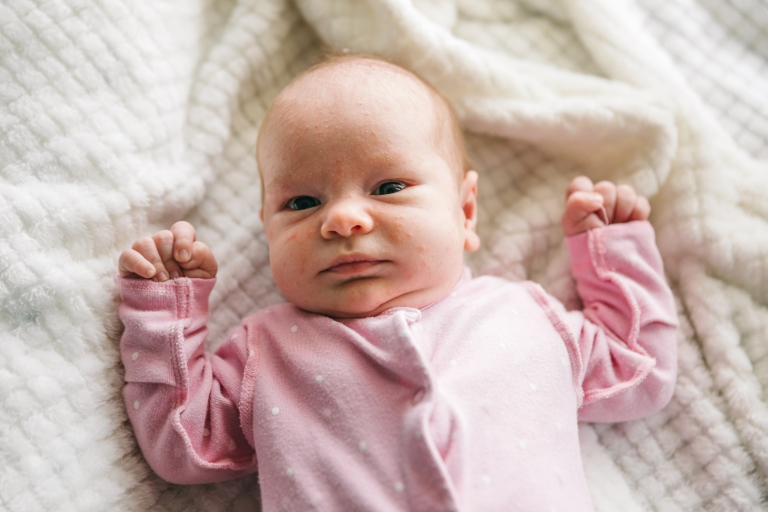
There are many causes for bumps and rashes in a newborn and most are normal, harmless, and will resolve on their own.Here are some of the most common newborn skin variations:- Milia: Many babies, upwards of 40%, will have tiny white or yellowish bumps on their face, typically on their nose or chin. These tiny bumps are thought to come from immature sebaceous glands or epithelial cysts. No treatment is needed, and these will typically clear up on their own after the first few weeks of life.
- : Newborn rashThis rash looks like a blotchy area of red rash with small bumps or pimples inside. The official name is erythema toxicum, but don’t worry—there is nothing toxic about it and there is no infection involved. Over 50% of newborns get some newborn rash, typically arriving soon after birth and staying maybe a week. This rash will resolve on its own, and lotions, soaps, or other treatments are not recommended. You just need a lot of patience.
- : Baby acne Also called newborn acne, this condition occurs in about 20% of newborns. It typically arises in the first 2 to 3 weeks and clears up on its own, usually before the third month of life. These are small skin-colored or red bumps most often seen on the cheeks and forehead. The skin around the bumps is not red or rashy.
- Inflammation. Most babies do not begin sweating until they are 6 months old, and the use of any cream or lotions may cause a breakout of bumps or a rash.
Treatment of Common Newborn Skin Conditions
Most bumps or rashes are harmless and will go away on their own. The bumps should not cause your baby any pain, itching, or other discomforts. If the bumps or rash seem to make your baby fussy, or your baby's face is very oily, you can care for their skin irritation by:- Gently wash their face with warm water and patting dry.
- Use a gentle, safe, and hypoallergenic baby wipe to clean the skin from anything that may cause skin irritation.
What to Avoid When Caring for a Baby’s Sensitive Skin
- Do not squeeze, rub, or try to pop the bumps.
- Do not apply lotions, creams, or acne medicines intended for older children and adults.
- Do not use baby powder as it can cause lung irritation and is not helpful.
The information of this article has been reviewed by nursing experts of the
Association of Women’s Health, Obstetric, & Neonatal Nurses (AWHONN). The content should not substitute medical advice from your personal healthcare provider. Please consult your healthcare provider for recommendations/diagnosis or treatment. For more advice from AWHONN nurses, visit Healthy Mom&Baby at
health4mom.org.
Pairs well With

Soins de la peau pour bébé
Soins de la peau pour bébé
Soins de la peau pour bébé
Soins de la peau pour bébé
Soins de la peau pour bébé
Soins de la peau pour bébé
Soins de la peau pour bébé
Soins de la peau pour bébé
Soins de la peau pour bébé