Baby Skin Care
All About Baby Acne
1 min. Read
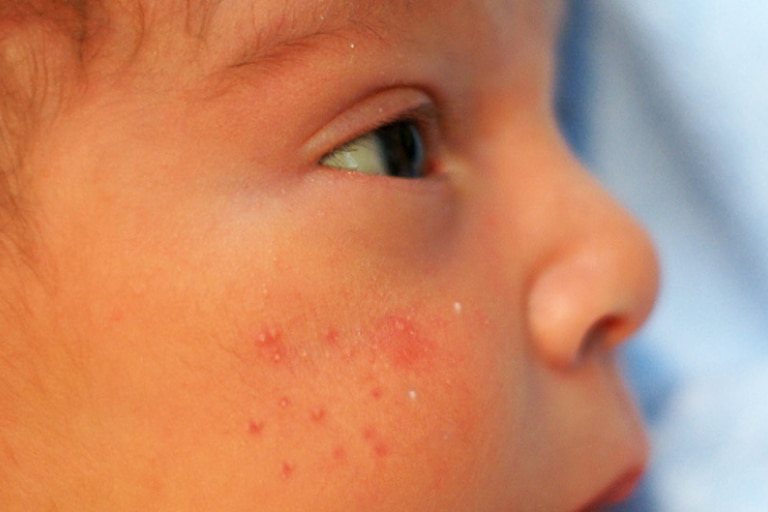
It's very common for a baby's beautiful, smooth skin to develop bumps and pimples and other rashes. These little blemishes, including baby acne, can pop up at any time from birth to a few weeks after they are born. Baby acne is nothing to worry about and it will resolve on its own.
You should consult your baby's doctor or a dermatologist if:
These symptoms may indicate other skin conditions that might need treatment or an allergic reaction.
Identifying the Start of Baby Acne
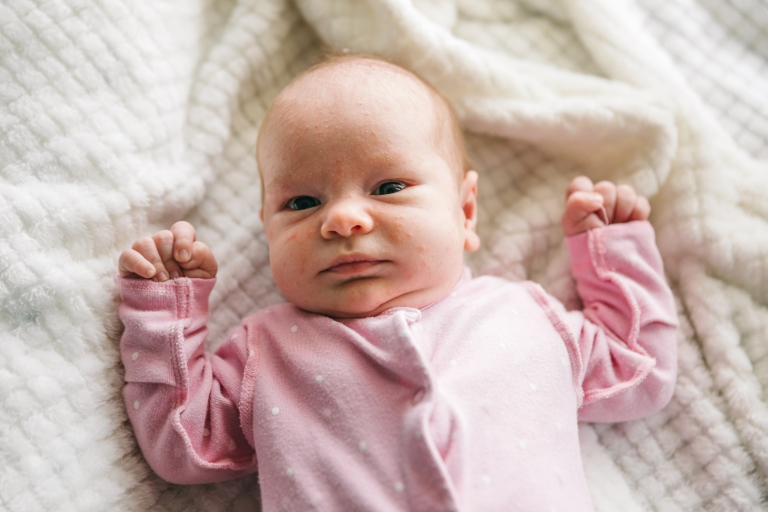
Baby acne can appear as small bumps most often on your newborn's forehead, cheeks, and chin. These bumps can be red, light pink, or the same color as the baby’s skin. Sometimes patches of acne can develop on the back of the neck or the shoulders. It may seem worse in certain situations, such as in warmer temperatures and during crying episodes.Causes of Baby Acne in Newborns
It is not known for sure what causes this, but many experts suspect it is from mom’s hormones that crossed the placenta in utero and are in your baby’s body. The acne will generally come and go until these hormones clear from your newborn's body. It will seem most prominent if a baby’s skin is irritated from:- Wet skin from spitting saliva or milk.
- Increased blood flow to the skin from fussing or heat.
- Exposure to certain products such as harsh laundry detergents or body washes.
Treating Baby Acne and Newborn Pimples
Treatment is usually not required. Baby acne should not cause any itching or discomfort to your child. It's best to just leave the area alone, as using lotions and ointments can aggravate the condition. Here are a few tips to treat baby acne:- Gently cleanse the area once a day with a soft cloth and warm water or gentle hypoallergenic baby wipes that contain no soap. Pat dry and avoid rubbing.
- Do not pop, pinch, or pick at the pimples.
- If your baby is scratching their face, try soft, cotton mittens on their hands at night.
- Acne cream or medicine developed for adults should not be used.
- Avoid oily skin care products on the affected areas.
- The outbreak spreads to other parts of their body.
- The acne has not cleared after a few months.
- The acne is accompanied by a fever or wheezing, or if the skin appears to be redder or inflamed than normal.
Preventing Baby Acne
Baby acne is very common and difficult to prevent. Eventually the hormones will leave your baby’s body and the acne will resolve on its own.
The information of this article has been reviewed by nursing experts of the
Association of Women’s Health, Obstetric, & Neonatal Nurses (AWHONN). The content should not substitute medical advice from your personal healthcare provider. Please consult your healthcare provider for recommendations/diagnosis or treatment. For more advice from AWHONN nurses, visit Healthy Mom&Baby at
health4mom.org.